Category: Uncategorized

  • Come Together in Prayer & Meditation

    by Ellen Caringer, PhD

    Let us, from all faiths, come together in prayer and meditation over these next four days, just as we did in the days leading up to the November election.

    At a time when the community is suffering, no one should say, “I will go home, eat, drink, and be at peace with myself.” – Babylonian Talmud Taanit, IIa.

    Do not defraud people of their property, nor go about spreading corruption in the land… And O my people, give full measure and weight in justice and do not deprive the people of their due and do not commit abuse on the earth, spreading corruption. – The Qur’an, Surah Hud 11:85

    Do not be anxious about anything, but in everything by prayer and supplication with thanksgiving let your request be made known to God, and the peace of God, which surpasses all understanding, will guard your hearts and your minds in Christ Jesus. – Philippians 4:6-7 (ESV)


    On Tuesday we face a crucial election in Georgia. This election may very well determine our ability to make any progress toward healing and restoring a nation. We have suffered at the hands of public servants who put themselves and their party ahead of the wellbeing of the nation and the preservation of this democracy.

    On Wednesday, we face an electoral college count like none we’ve ever experienced. There will be senators and congressmen willing to overthrow the will of the people, by claiming without evidence that there has been a massive fraud in our election system. While this is not expected to succeed in overturning the will of the people and the Biden/Harris election, it can succeed in further dividing our nation, and deliberately making it more difficult for those public servants who are seeking to bring us together as a nation.


    And so, in the spirit of the passages above, let us, from all faiths, come together in prayer and meditation over these next four days, just as we did in the days leading up to the November election. Let us envision and prayerfully ask that ethics, justice and righteousness be restored in our nation. Let us pray for the election of leaders who are willing to address the hard questions of systemic racism and intolerance. In Hawaii we talk about the need to be “pono” in our actions and our deeds so that our community can be one that is righteous and just for all people, not just the preferred few. So please consider this a call to prayer and meditation for the health and wellbeing of our democracy, and that the events in our nation will be events that lead to peace and justice, rather than violence and hatred. Mahalo for joining us!

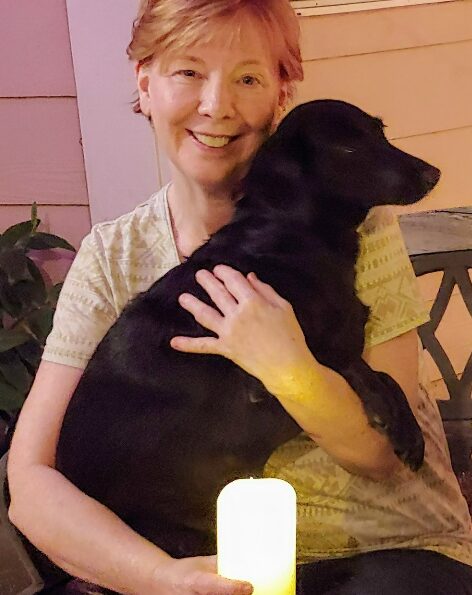
    Dr. Ellen Caringer is a member of the Shine Your Light Team, and is a psychologist and neuropsychologist on the island of Maui. She has been church pianist for Keawalaʻi Congregational Church for over twenty years, and is one of the founders of Hui Aloha ʻO Maui Indivisible.

    Left: Dr. Caringer, holding one of her pups, Matilda, shines her light in Kihei, on the Island of Maui.

  • IMUA

    by Rev. Kealahou Alika

    It has been said that in looking back, we become aware that our vision of the past is hindsight. It’s easier for us to analyze and evaluate situations when we are looking back to the past, than when we are looking in the present moment.

    Hindsight is about reflecting on things in the past and 20/20 refers to perfect vision. If we are to look back on the year 2020, it will require an acknowledgement of the polarization that has occurred in our political and religious discourse.

    An ‘ōlelo no‘eau or Hawaiian wisdom saying that I am often wont to quote is: “Nānā i mua, nānā i hope. In order to move forward, we must look back.”

    In looking back over the polarization that has occurred across the U.S. throughout the year and especially in the weeks leading up to electoral vote count, a friend recently wondered out loud whether or not we would be able to return to civility; that is, whether or not the way we communicate with one another can be done with civility; whether or not we can engage in respectful discourse and with common decency.

    According to the Oxford Dictionary, civility is defined as “formal politeness and courtesy in behavior or speech . . . courtesy, politeness, good manners.” As I thought about the political turmoil over the last week, I thought about the political turmoil that engulfed Hawai‘i as American business interests sought to limit the constitutional power of Lili‘uokalani.

    What would we say of the coup that occurred when a group of American sugar planters under Sanford B. Dole established a provisional government with Dole as President?

    What would we say of the foreknowledge of John L. Stevens, the U.S. Minister to Hawai‘i and the 300 U.S. Marines from the US Boston called to Hawai‘i under the pretense of protecting American lives?

    President Grover Cleveland responded by sending a new U.S. Minister, James Blount, to restore the queen to her throne under the 1887 constitution, but Dole refused to step aside and instead proclaimed the independent Republic of Hawai‘i. Cleveland’s successor President William McKinley negotiated a treaty with the Republic of Hawai‘i in 1897. A year later the Spanish-American war broke out and Hawai‘i, with its port at Pearl Harbor, became a strategic location for its naval base. A year later, Hawai‘i was annexed to the U.S. by a joint resolution of Congress. In 1900, Hawai‘i became a U.S. Territory.

    Looking back, we now know that among the people of Ka Lahui Hawai‘i, the nation of Hawai‘i, there was resistance to the overthrow and the annexation of Hawai‘i to the U.S. In her own moments of self-reflection, Lili‘uokalani offered her observation of what had transpired as she looked to the future.

    If there is to be a return to civility, it will come “on the width of a blade of pili grass.”

    The queen wrote: “I could not turn back the time for political change, but there is still time to save our heritage. You must remember never to cease to act because you fear you may fail. The way to lose any earthly kingdom is to be inflexible, intolerant and prejudicial. Another way is to be too flexible, tolerate of too many wrongs and without judgment at all. It is a razor’s edge. It is the width of a blade of pili grass. To gain the kingdom of heaven is to hear what is not said, to see what cannot be seen and to know the unknowable – that is aloha. All things in this world are two; in heaven there is but One.” (The Betrayal of Lili‘uokalani: Last Queen of Hawai‘i 1838–1917, Helena G. Allen, Mutual Publishing, Honolulu, Hawai‘i, 1982)

    The Rev. Kealahou Alika retired in February 16, 2020 as the pastor of Keawala‘i Congregational Church – United Church of Christ (USA), Mākena, Maui having served the church for 29 years. He currently serves as an officer of the Hawai‘i Conference Foundation of the Hawai‘i Conference – United Church of Christ; as an officer of the State Council of Hawaiian Congregational Churches; and as a member of the Reconciliation Working Group of the Hawai‘i Conference (UCC). He previously served as the Executive Director for what was then known as the Pacific & Asian American Center for Theology & Strategies in Berkeley, California from 1979 – 1985 and later as an Administrative Assistant for Mission & Evangelism for the Presbytery of San Francisco, Presbyterian Church USA from 1986 – 1991.

    The Rev. Kealahou Alika retired in February 16, 2020 as the pastor of Keawala‘i Congregational Church – United Church of Christ (USA), Mākena, Maui having served the church for 29 years. He currently serves as an officer of the Hawai‘i Conference Foundation of the Hawai‘i Conference – United Church of Christ; as an officer of the State Council of Hawaiian Congregational Churches; and as a member of the Reconciliation Working Group of the Hawai‘i Conference (UCC). He previously served as the Executive Director for what was then known as the Pacific & Asian American Center for Theology & Strategies in Berkeley, California from 1979 – 1985 and later as an Administrative Assistant for Mission & Evangelism for the Presbytery of San Francisco, Presbyterian Church USA from 1986 – 1991.

  • Startled In the Darkest Place

    by Chaplain Dan Hix

    Pay attention as to a lamp shining in a dark place. – II Peter 1:19 (NASB)
    All the darkness in the world cannot extinguish the light of a single candle. – Saint Francis of Assisi
    Your vocation in life is where your greatest joy meets the world’s greatest need. – Frederick Buechner

    Where do you go when you need encouragement; when darkness oppresses, despair unbearable? Where do you go? How about the darkest place of all? Cannot believe I am saying this, but for the last few months, it has been as true as true can be for me. As I think about where I have been most startled, most inspired, most filled with hope and wonder recently, more often than not, it has been on the COVID UNIT, it has been in the darkest place of all. So, I suppose I shouldn’t have been surprised when I cautiously made my journey through the other day and encountered this, my friend, Leonard, the COVID Warrior, decked out in PPE with Christmas lights blinking inside his hood.

    When John the gospel writer strained to describe the indescribable, the wonder of the light of God up against the powerful, the insidious darkness he called that resilient, determined light “incomprehensible.” Staring dumbfounded at Leonard last week, thoroughly entertained and profoundly moved, I wondered if perhaps this is at least part of what John meant: you see the light and it is so absurdly out of place, so astounding, so unexpected, so wonderfully disorienting in the oppressive gloom, you cannot quite believe what you are witnessing; it is incomprehensible. But my goodness, is it ever welcomed, because if light is going to be Good News anywhere, it is going to be Good News there, right there in the darkest place of all.

    With the assault of a deadly virus Leonard has found his vocation, his sacred, holy labor, startling us, reminding all of us what a great privilege it is to do what we do and to do it together. When with open hearts we use our gifts, invest our passion, even lay down our lives to take care of each other, we are doing God’s work. Just be glad there is no audio and video with this. Leonard has a whole routine involving dancing to Christmas music. “You do what you have to do, Padre, to brighten their day.” Believe me, you do not want to imagine it, but we howled with laughter. Who would have thought in the darkest place of all? Howling laughter. Incomprehensible light. Pay attention.

    Dan Hix presently serves as a chaplain with Turkey Creek Medical Center in Knoxville, Tennessee. He is originally from North Carolina and came to Knoxville in the fall of 1988, taking a position with the Baptist Healthsystem of East Tennessee. Dan received his Clinical Pastoral Training at Riverside Methodist Hospital in Columbus, Ohio and North Carolina Baptist Hospital in Winston-Salem, NC. He is endorsed by The Cooperative Baptist Fellowship for hospital chaplaincy. Dan is a graduate of Wake Forest University and Southern Baptist Theological Seminary.

  • A Lament and a Prayer

    by the Rev. Danette Kong, with a prayer from Rev. Dr. Robert W. Nelson

    While trying to put together a post for the website about Hope and Courage and Being Light, I pondered that I can only experience these ideals for myself in bits and pieces at a time. How do we live IN Hope? How do we live IN Courage? I type words and post pictures for the website, and they feel to me right now to be so lofty and idealistic. Yet, this past week as we watched the intrusion of hate-filled, wannabe warriors upon our nation’s Capitol, I felt a quivering in my chest as I realized we were facing something truly evil happening in the seat of our government. I’m quite aware that, on many occasions I have been posting meditations and quotes to help ME cope, to tell ME not to be discouraged, to tell ME to have courage and hope, more than anyone else.

    It’s not exactly that I am WITHOUT Hope. But uncertainty lingers around longer, like an unwanted trespasser. I have had a dark, foreboding sense of these times we are facing since November and December, 2019. So, I am not surprised, but the magnitude of what is imminent is heavy — and heavier over this past week than it has ever been.

    Probably the most fearful I have been for my life was while marching in Cumming, Georgia a week after Martin Luther King Day back in January, 1987 – and here we are, just a couple weeks shy of that day, 34 years ago. The little girl whose hand I held throughout those miles of marching turns 39 this year, and I still feel that sweet little palm in mine. Perhaps it was a sense of needing to be protective and strong for her that kept me going, while her dad carried a huge American flag on a large pole. I recall seeing blood running down the faces of other marchers who had bricks thrown at them, the jeering and spitting from Ku Klux Klan members dressed in their hoods (and, by the way, what kind of detergent do they use to keep those robes so white?). All these decades later, I still see those people in my mind’s eye – they are filled with fury, carrying their young children who quite possibly are part of the insurgency today. While rushing back to our own car, my eyes glanced quickly at officers of the law, their clubs batting and swinging, chasing down racists who had been attacking other marchers, handcuffing those predators on the ground. Pandemonium.

    And those of us who marched were privileged to have been protected by the National Guard. I marvel at how blacks (and some white clergy) marched over Pettus Bridge in Selma back in the 1960s, knowing full well what kind of physical price they would probably pay. And there were NO National Guardsmen there for them that day.

    It takes a lot of “crazy” for people to riot together, as well as to march peacefully together. When you are rioting and destroying together, I imagine there’s some sort of adrenaline rush of brotherhood and testosterone, like being on some sort of hunt in the wild, or saving the world from alien invaders. But when you are trying to march peacefully, you realize some people don’t care if they injure you, your eyes are tempted to dart in all directions, and you are hypervigilant. That’s a whole other type of “crazy.” I think of MLK, Jr., and John Lewis, because they were able to make peace with injury/death, and kept their eyes focused on “the prize.” I wonder how those poor guards and police felt being overpowered in the Capitol building last week; how the leaders of our government felt being evacuated.

    Throughout my life, I have sat at my piano, or held my guitar as I tried to make sense of questions and struggles in my life — or as I simply tried to find an outlet for emotions I could not reasonably identify, let alone, fathom. The day after the Capitol invasion, I tried to sit at my piano and write music that is hopeful, but I couldn’t. I found myself writing words that were defiant, but my hands and my heart didn’t want to cooperate on the keyboard. I suppose I could try to write music to dance to someday, but its time hasn’t arrived.

    Sometimes I just hold a candle and feel the warmth it lends to my hand, and just try to center in that. Sometimes I find I am holding my breath, like I’m waiting…waiting…for the unknown, before I allow myself to really breathe normally again. Will that ever be possible? And sometimes, especially when I wake up in the morning and my bed is warm while the chill touches my face, I just want to stay under the covers and not face the reality of these days.

    I shared these feelings with the rest of our Shine Your Light team, discouraged somewhat by its melancholy. The Rev. Dr. Robert W. Nelson responded with a prayer inspired by words from the New Zealand Prayer Book, and we offer it here:

    “God of this uncertain world,
    Reveal yourself to us, who are so uncertain at this time
    and in distress. Help us to come to terms with the reality
    of divisiveness, seditiousness and racism, and still to hope,
    still to search out what there remains to do.
    God be our comfort and support;
    God be our hope and strength;
    God be our Light and our way;
    Creator, Redeemer and Giver of Life, remain with us now
    and forever. Amen.”

    Both The Rev. Danette Kong and The Rev. Dr. Robert W. Nelson are members of the Shine Your Light Team. Danette is a retired hospital chaplain and ordained minister with the United Church of Christ who lives in Kula, Maui. Bob is a retired priest with the Episcopal Diocese of Alaska. He lives in Kihei, Maui.

  • Seeking an Understanding

    by Dr. Calvin Wood

    After the November election and recent developments, I have felt the need to understand my fellow Christians who are characterized in the media as Christian Nationalists, who are working to write many of their beliefs into laws in the USA as we work to heal and unite the divided nation.

    Some who identify as Christians claim that we are a Christian nation and that our laws must reflect this. Their aim, as best I can surmise, is that we should make this political entity, the USA, into the kingdom of God (KOG). I ask myself, what did Jesus say about his kingdom? “The KOG is within you” (Luke 17:21, KJV) and, to Pontius Pilate, “My kingdom is not of this world” (John 18:36). So the problem of turning a political realm into the KOG may be ignoring what He said. A real problem that I see is that many of the laws proposed are not shared in principle by all Christians.

    For example, there is wide difference between Christians who see LGBTQ folks as fully God’s children and those who find them aberrant; those who are pro choice vs. pro life; those who feel differently about birth control access; those who feel that deviation from some outward of expression of patriotism is ‘un-American,’ even though kneeling during the national anthem may be a way for some to publicly express a feeling that perceived injustices should be addressed, etc. So perhaps the thrust to Christianize the USA may miss an important point about the freedom of will that Christ thought was necessary for us to be able to choose freely to come to Him. If these ideas are some of the deep divisions among different Christian churches about these things, how do we accommodate those who practice other religions, or none?

    The notion that the KOG is within me has come to mean to me that personal spiritual transformation is the goal of the KOG, not the wielding of political influence in the world. And I find some backing for this idea when Jesus asks what profit there would be to a man to gain the whole world [political power] and lose his own soul? (Matthew 16:26). Perhaps the principle of the separation of Church and State was indeed the hand of God inspiring the founding fathers in the beginning.

    As a child, I privately addressed my feelings, when bullied, by imagining having the power to punish the bully, often violently. My imaginative life found a way for me to live out fantasies by being the hero in my interior narrative. But eventually I read a book that expressed the idea of living ‘inside out.’ I soon came to realize that I truly wanted to be a man of peace inside, as well as in my public persona. But I then discovered that the neuronal pathways of my brain had been so strongly conditioned by my past that my thoughts went there automatically, even when I tried to reprogram them. The only pathway that worked for me was to appeal to God to take over my entire inner life and change me into a truly peaceful person. A downside for my slowly changing interior peace was that I recently found that I was so genuinely distressed that men in our government, that appeared to me to be hypocrites [Jesus’ most damning epithet], could be expelled from the presence of God that it genuinely caused me a new and unusual deep sadness for their souls, as if my evaluation of the situation were indeed the truth of the matter. I think change is possible. But I now feel that the salvation of souls is an individual enterprise and is not accomplished en masse.

    My personal quest is to find a closer walk with Jesus through meditation and prayer, praying only for knowledge of His will for me and the power to carry that out. May God grant us guidance in seeking healing for this Nation.

    Dr. Calvin Wood lives in Livermore, CA. He graduated from UC Berkeley with a BA in Physics (1957) and a PhD in High Energy Particle Physics in 1961 and was an assistant professor at the University of Utah (1962–1964). He served as a U.N. Inspector after the first Gulf War in Iraq (1991) where he helped discover and dismantle an extensive nuclear weapon development program there. After retirement from the Lawrence Livermore National Laboratories in 1993, he has continued to work with LLNL as a consultant. As a member of the Church of Jesus Christ of the Latter Day Saints (LDS), he served as an LDS missionary (1952–1955), later joining the United Methodist Church in the mid-1990’s. Married in 1955, he has 5 children, 16 grandchildren, 20 great grandchildren. He is involved in several community projects in Livermore (providing low-cost housing for seniors, distributing food to low income families, taking a program into the local penitentiary, etc.) and spends a significant amount of time on Maui each year where he is part of the Keawalaʻi Congregational Church `ohana.

  • Where Do You Look for the Help You Need?

    by Kekoa Harmon, PhD

    “E leleha aku au i ko‘u mau maka i na mauna, ma laila mai ko‘u kokua e hiki mai ai.” (Halelu 121.1-2)
    “I lift my eyes to the mountains, it is from there that my help comes from.” (Psalms 121:1-2)

    This particular scripture holds a special place in my heart and memory. We started singing this mele or song taught to our oldest at the Pūnana Leo o Hilo Language Nest preschool in 2004. The first Pūnana Leo preschool started in Honolulu in 1983 and had strong native speaker influence from the island of Ni‘ihau. These songs shared by native speakers from Ni‘ihau focus on meaningful Bible verses in Hawaiian. Many of these favorite songs naturally became a part of the curriculum of all the Pūnana Leo preschools as they are songs easy to learn in Hawaiian, appropriate for preschool aged children. As a young ‘ohana (family) at the time in 2004, my wife Pele and I found comfort in this scripture and in singing this song at home with our children. We even named our first born son, Kaumuali‘i (15), “Nāmakaleha” the eyes that look above, with hope that he always looks to Akua or God for help. Time has sure flown by since our eldest was in preschool. Our hiapo (eldest daughter), Kalamanamana (19) is a sophomore in college now, Kaumuali‘i (15) is a sophomore, Nālipo‘aimoku “Pine” (14) is a freshmen, and Hi‘iaka Keawala‘i our youngest, is 11 months old.

    This scripture and song continue to hold relevance for us as our family has grown and matured. Life is tough. We see challenges today that we could not predict or prepare for. Where do you look for the help you need? How do you be a good role model to your children, to show them where to seek help? How do you help others to find the help they need?

    Just as we find peace in this scripture, Psalm 121, Keawala‘i Church was a place of peace for my grandmother and grandfather, the late Lois and Bob Love, members of Keawala‘i. Keawala‘i continues to be a place of la‘i and calmness for so many that gather to seek the love of ke Akua (God). The love of ke Akua is what will guide and protect us for the rest of our lives. Me ka ha‘aha‘a (With humility), Kekoa

    Born and raised on Maui, Kekoa Harman is an associate professor of Hawaiian studies and Hawaiian language at the University of Hawai‘i at Hilo. He is an educator not just for the benefit of his students, but to ensure the preservation of the sacred dialect that is ‘ōlelo Hawai‘i (language of Hawai‘i). Realizing its importance, Harman has borne the responsibility of carrying on the Hawaiian language through teaching since being hired as a lecturer in 2003. He started his current position in 2010 and graduated this past spring with his doctorate in indigenous language and cultural revitalization. Kekoa and his wife, Pelehonuamea, are Kumu hula (teachers of hula) of Halau I Ka Leo Ola O Na Mamo. Their mission is to perpetuate the Hawaiian language and culture through mele (song) and hula. In this personal testimony Kekoa offers a word of hope for our day based on his experience of scripture, ‘ohana (family), and church. We offer his thoughts by inviting you to look beyond the despair of our present moment to the hope which is ours when we remain grounded in tradition and family. Kekoa Harman is a symbol of giving and connecting—to his students, to his people, to the language, and to the culture.

  • Queen Liliuokalani’s Response to the Overthrow

    by Sheron Leihuanani Bissen

    Queen Liliuokalani’s Prayerful Response to the Overthrow of the Hawaiian Kingdom in 1893 was her hymn, “Ke Aloha A Ke Akua,” sung on this video by Sheron Leihuanani Bissen. She is accompanied by Danette Kong, who also provides a prelude based on the Hawaii National Anthem, “Hawaii Pono’i”

  • Takayuki Harada

    From “Kalaupapa in Poetry” by Taka Harada

    Solitude and pain were his companions
    Walking the path of the Suffering Servant.
    How difficult to fathom
    the great sorrow he felt,
    The lost and aimless lives he encountered,
    No hope for the morrow and
    only sadness for the day.
    The rocky and windswept plains of Kalaupapa,
    So much like the barren and
    dusty hills of Jordan,
    The same hills that his Christ trod
    for a lost humanity.
    The hidden broken lives
    obscured by human prejudice,
    Or by the uncaring and unloving spirits
    of the world.
    Lives shattered and literally disintegrating,
    Such horrible scenes
    witness to society’s inhumanity.
    His mind opened to the wisdom of God.
    His ears heard the cries
    halfway around the world.
    His eyes beheld the needs of
    pitiful human tragedy,
    His mouth spoke words of comfort and love
    for his adopted flock.
    His hands unafraid to touch
    the vilest of human flesh.
    His heart molded by
    the Master’s loving touch of compassion.
    His feet walked where need resided
    and cries were unheeded.
    The richness of earth
    comes from souls like his,
    No greater love for all the world to witness.
    The crown of life was his
    but he did not claim it,
    Oblivious to worldly fame and fortune.
    He answered the Master’s call to duty.
    Kalawao and Kalaupapa were but a sojourn
    to this man of faith.
    Damien the Blessed of Kalaupapa.

    In addition to his mastery of gardening and Hawaiian throw-net fishing, Taka Harada is a published poet, known for his wise insights, gentle voice and ʻukulele strumming. He retired as the owner of his own insurance company and has served as Church Moderator for Keawalaʻi Congregational Church on the island of Maui. As a member of Ka ʻOhana ʻo Kalaupapa, he has been active in the effort to honor the memory of the 8,000 patients who died in the settlement. He has three daughters, several grandchildren, and great-grandchildren keeping him on his toes, and is married to Dr. Ellen Caringer.

  • Taka Harada

    by Taka Harada

    As I watched the United States’ leadership transition take place this week, the difference in leadership styles could not be more profound. We pivoted from one leader who espoused the “America first – Me first” never-mind-about-others mentality, to a leader who immediately exhibited a servant’s heart. It was rejuvenating to watch our new leader express gratitude for all of the other selfless individual’s in our nation and society – the countless doctors and nurses and healthcare workers, who sacrificed and gave so much during this pandemic. It was his “servant’s heart” that helped the nation express their own unacknowledged and unaddressed sorrow in the loss of over 400,000 souls to the current pandemic. Someone who leads with a servant’s heart is what was so desperately needed in the midst of the multiple crises we currently face in our country. Soaking in this transition, I reflected back on a man the Catholic church calls “Saint Damien,” the saint of Kalaupapa. This was a man who truly exhibited leadership with a servant’s heart. He was tough and demanding with the Catholic hierarchy in insisting on meeting the needs of his flock, to the point of being a thorn in their side. He was fearless in living among the patients of Kalaupapa and treating the Hansen’s Disease (leprosy) patients in Molokai at a time when all others were afraid to be in their presence. He insisted on being a voice for the voiceless. The light of his soul can still be felt for those who have the opportunity to traverse this remote stretch of land beneath the cliffs of Molokai. So as we in the United Church of Christ celebrate Kalaupapa Sunday this month, I’d like to share a poem from “Kalaupapa in Poetry” and ask us all to reflect on having “a servant’s heart” to shine your light in the areas of need within our individual communities. Mahalo for all that each of you do to contribute to making this world a better place!

  • The Bible’s Virus of Violence

    by The Rev. Wayne Ibara

    For nearly a year now, the world has been afflicted with the Covid-19 pandemic. But another virus has also been all too active, including in our own country. It is the virus of violence. We have always struggled with this virus, but its threat took new form on January 6, when the U.S. Capitol was invaded, looted and desecrated, and five people died, one a police officer. Many other officers were injured; some very seriously. And this weekend, as the inauguration of a new president approaches, there are more soldiers deployed in our nation’s capital city than in Afghanistan, Iraq and Syria combined. Twenty-thousand fully armed and equipped national guardsmen. As a nation we are on edge. As former ambassador Fiona Hill said last week, we are on the brink of civil war. What is going on with us as a country? Why is the virus of violence so potent in our society?

    One answer is that the Judeo-Christian faith and the Bible are huge in our history, culture and society. And the Bible contains a virus of violence that we have not fully acknowledged, addressed and dealt with. And I think we need to. What do I mean by “the Bible’s virus of violence”? I mean the many texts in the Bible, as in Deuteronomy 7, where God explicitly commands genocide. The Conquest of the Promised Land, filled with “seven nations larger and stronger than you.” God says, “…you must destroy them totally. Make no treaty with them, and show them no mercy.”

    Most of us are aware of this “Dark Side” to the Bible—those disturbing passages, especially in the Old Testament, where God calls for horrendous acts of bloodshed–the bloody pages of the Bible. Our response is often like the lectionary: we ignore them. We leave them out. But like a new coronavirus, ignoring the virus of violence in the Bible does not make it go away. And I’ve come to believe that continuing to ignore the Bible’s violent passages means the virus remains—and spreads.

    Take the Conquest story—told largely in Joshua and in the Book of Judges. It’s cast a dark shadow throughout history. Most relevant to us is the way that the American Colonists used this story to justify warfare against Native American peoples, driving them out and often exterminating them from the East Coast to the West. The same thing happened in Central and South America with Spanish conquistadors. In the name of God, native peoples were killed, driven out and enslaved. In what has been called the Doctrine of Discovery, Christianity supplied the spiritual justification for the European conquest of the Americas based on Israel’s Conquest of the Promised Land. The U.S. Supreme Court in the 1800’s even provided the official legal basis for this racist policy.

    Both the Catholic Church and some Protestant churches—including our own United Church of Christ—have for years now repudiated the Doctrine of Discovery. But the Bible’s virus of violence is a deeply-rooted and slippery thing. The ultimate anti-virus, of course, is Jesus. Instead of conquering, Jesus sacrificed himself, allowing human depravity, death and the devil to conquer him. The short version of my lesson today could be to simply look to Jesus as our example. But that leaves the virus of violence out there.

    We will serve the LORD, Joshua proclaims. But what does this look like when in the context of Joshua’s declaration, serving the LORD has apparently meant all out genocide—the slaughter of men, women and children—even their animals? We will serve the LORD. This rallying cry resounds through the millennia to our present day and our own country, fueling self-identifying Christian right-wing militias wielding assault rifles. The Bible’s virus of violence is potent precisely because it is the Bible’s virus. And there are basically four ways to respond to it.

    The first way is to ignore it, which we have largely been doing. But this doesn’t make it go away.

    The second way is to defend it, usually by emphasizing God’s holiness over the Canaanites’ evil. This was my take for a long time. But I’m not satisfied with this argument any longer. Because in our own day, it’s become clear that demonizing groups of people is a tactic of thugs with their racist agendas. And in the end, it always seems to turn out that we have more in common with others than not. We are all flawed, broken, sinful humans.

    The third way to deal with the Bible’s violence is to say that God changes from the Old Testament to the New, that God evolves. I’ve never been especially drawn to this approach because it solves one problem by creating another.

    But the fourth way is the way I think most Christians ought to consider first, and that is to learn to read the Bible differently. To many of us who come from a conservative Christian background, the Bible was always the Holy Bible, inspired by God, inerrant or infallible, the Word of God. It was like God wrote it out himself and handed it to his people as a complete and perfect rulebook, written for our benefit and for all time. The problem is that reading the Bible this way creates a lot of opportunity for the virus of violence to grow.

    Pete Enns, who teaches Bible at Eastern University, challenges this perspective in a good way. He urges his students to recognize that God didn’t write the Bible and hand it down. God let his children tell the story. God inspired the Bible, but God used people to write it. This introduces an important layer of human perception and experience into what we now have as our Bible. The Bible is revelation, but it is revelation from our limited, human point of view, expressed in the terms and ideas current in each of its historical human settings.

    At the beginning, for example, in the earliest and most ancient stories, everything is tribal. It’s win or lose, us or them, and everybody’s god is a Tribal Warrior God. That’s the way the world was 3,000-plus years ago. But after Israel itself is conquered by the Assyrians and then the Babylonians, and sent into Exile, the Warrior God of Israel obviously does not reign supreme. And the Old Testament ends without a resolution. Yet out of this disaster, Israel is inspired—we would say by God—to reinterpret and transform her understanding of God. The Bible itself benefits from this dynamic process.

    That is why we can take the bloody pages of the Bible with a grain of historical salt. We can notice that the Bible itself gives us a nuanced story. Deuteronomy 7 describes total genocide. Joshua offers specific stories of cities being razed, beginning with Jericho. But the first chapter of Judges reports plainly that the Conquest was not complete; that in most cases, the tribes of Israel did not drive out all the inhabitants. This is why Israel has a persistent problem worshiping the gods of these pagan people.

    So the Bible is not a perfect, polished, supernatural account of the history of the world and of what the future holds. It is instead an authentic, inspired and ancient account of an ongoing relationship between a people and a God who hears their cries, chooses them and offers them guidance and grace.
    The Bible is not a story of people who got things right and were therefore rewarded by God. It is a bunch of stories of all kinds of people, many of whom got things terribly wrong. It doesn’t give us all the answers. In fact, it triggers a lot more questions.

    What the Bible offers us is not a black and white record of “everything you ever wanted to know about God” but a record of God’s people wrestling with life and coming to perceive God’s purpose for them. Rather than view the Bible as a rule book, or a how-to manual for life, Enns proposes that we look to the Bible for wisdom. And we do this by joining in the conversation of faith that the Bible represents. (argue like the Jews)

    And the virus of violence? Jesus is our anti-virus—but we ourselves are the ones who need to carry the vaccine. And we do this by reading the Bible better.

    Pete Enns often tells his Bible students, “The Bible is a terrible evangelistic tool!” He does this to jar them into looking at the Bible from a different point of view. His point is that the Bible is not really as simple as we’ve all been told it is. Using the Bible with someone who has never read it before can easily become confusing, complex and frustrating. What Enns tells his students is that they are—we are—the best evangelistic tool. It’s Christ the Word in us that communicates most effectively, most powerfully, most persuasively. And that’s really what the church mostly had for most of its history. Not a printed book to hold over people’s heads, but a living testimony—most convincingly demonstrated by a flesh and blood community—the church. If we can see the Bible as a supernatural idol and more as an inspired and unique human treasure that offers us wisdom for life as well as revelation of God—crowned by the coming of Jesus—the virus of violence is largely contained and defeated. May it be so with us. And with our nation as well. Amen.

    The Rev. Wayne Ibara was born and raised on the island of Kaua‘i, and received his Master of Divinity degree from Fuller Theological Seminary. After serving as pastor for the Los Angeles Holiness Church, he returned to Hawai‘i, where he has led the Makiki Christian Church as its senior pastor since 1995. Rev. Ibara and his wife, Phyllis, have a teenaged son, Isaac.